
The parent shares
"At home we speak Bahasa Melayu and some English. Nobody at home speaks Mandarin. My child sings the class songs in the car, but I do not know what they mean."
Parent guide
If you are choosing a preschool in Klang that teaches Mandarin but do not speak it at home, start with a conversation with your child's teacher. You do not need to become a Mandarin teacher. Choose a few materials together with the teacher, and keep talking at home in the language you know best.
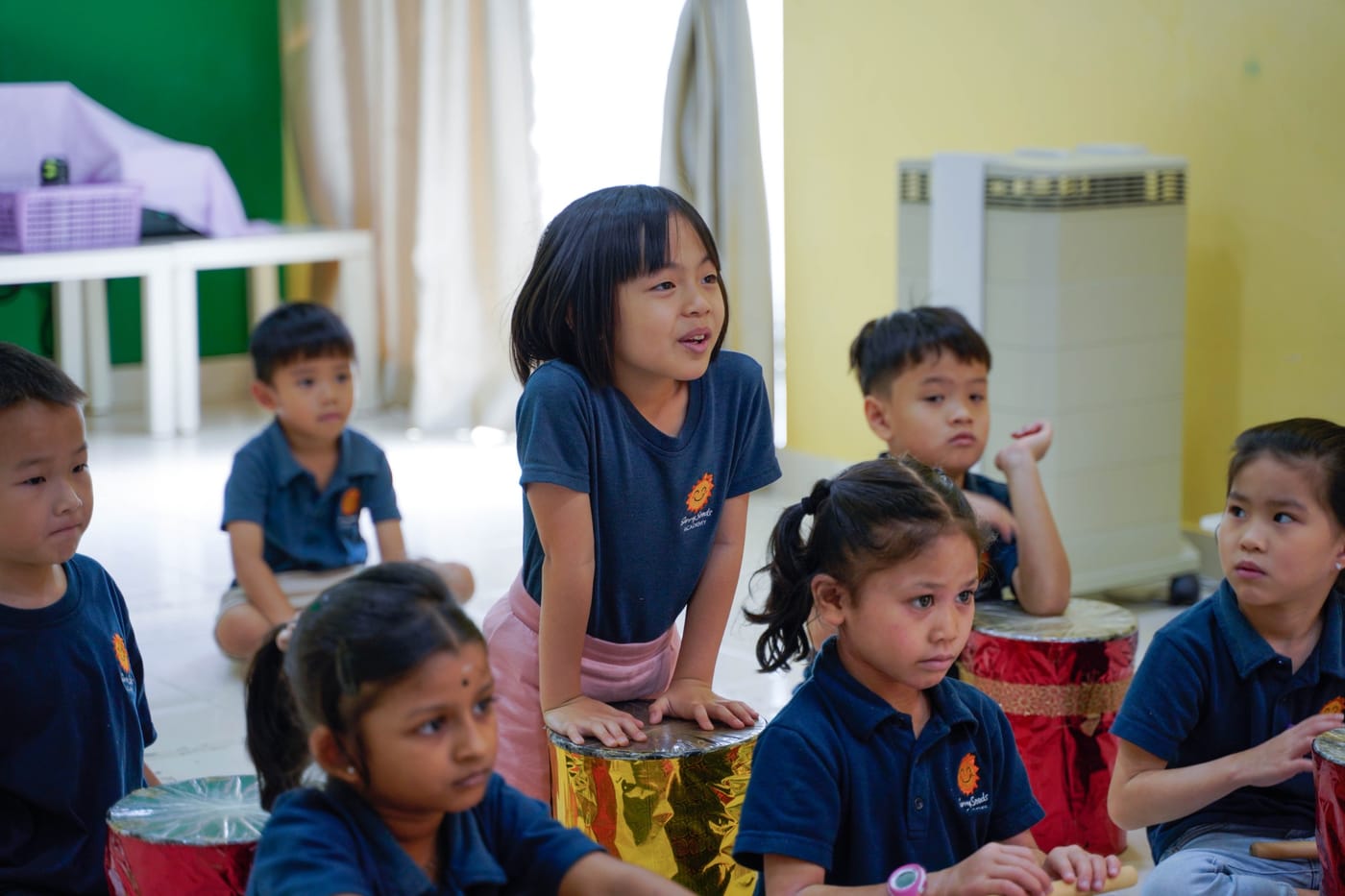
Start with a conversation, not a course. Tell your child's teacher which languages your family uses and what your child understands. Ask which words, songs or books the class is using now, and whether there is a book or recording at your child's level that the teacher would suggest. Then pick one small, realistic thing to do at home, and keep talking, reading and playing with your child in your own strongest language. You do not have to pronounce Mandarin well to support it.
About this guide. The questions, the example conversation and the conversation sheet here were written by SunnySeeds Academy for families. They are suggestions for a talk between a parent and a teacher. They are not a SunnySeeds policy, a class lesson or part of a licensed curriculum, and they are not a test.
Parents who do not speak Mandarin sometimes feel they should switch to it at home, or drop their own language so their child gets more practice. Usually the opposite helps more. WIDA, an education organisation in the United States, describes families and early educators working together as partners, and encourages families to keep using their home languages, because adults who use the language they know best can have richer conversations with children. That resource was written for early education in the United States, so we use it only as general background, not as a Malaysian rule or a description of our school.
In practice, a long, warm conversation about a story, a meal or the day, in Bahasa Melayu, English, Tamil or whichever language you speak best, gives your child plenty of language to think with. School can add Mandarin; home can keep conversation rich.
Before you ask about Mandarin, tell the teacher about the languages your child already uses. This helps a teacher understand your child, especially when your child is new to one of the school's languages.
Rather than hunting for Mandarin materials on your own, ask what the class is already doing. Home support is easiest when it echoes school.
Write down what the teacher tells you, in Chinese characters, pinyin or your own spelling, whatever helps you recognise it later.
If you do not speak Mandarin, guessing the sounds from pinyin is hard. You can ask the teacher whether there is a song, a recording or a book with audio they would suggest, or whether they could point you to a reliable example of how a few class words sound. Schools and teachers handle this differently, and it is a request rather than something a school must provide, so ask in a way that is easy to say no to.
If an example is available, treat it as something to listen to together. Your child can repeat after the recording while you enjoy it alongside them. You do not need to copy every tone yourself.
The conversation goes both ways. Tell the teacher what you notice at home: Mandarin words your child says, songs they sing, or moments when they wanted to say something and could not find the words. The aim here is to share observations and agree on useful support. This sheet is not a vocabulary test and proposes no home memorisation quota. Ask the teacher what is appropriate for your child.
Here is an original example of how a short conversation might go. Your own version will be different.
"At home we speak Bahasa Melayu and some English. Nobody at home speaks Mandarin. My child sings the class songs in the car, but I do not know what they mean."
"Which song or topic is the class using now? Is there a book or recording at my child's level you would suggest, so we can listen together instead of me guessing the sounds?"
"My child understands more than they say. If they seem to want to say something in class and cannot, please tell me, and I will talk about it with them at home in Malay."
"We will listen to the class song together a couple of times a week, and I will tell you next time whether my child enjoyed it."
Pick one or two of these, not all of them. A plan that fits a busy week lasts longer than an ambitious one.
If you are considering an SJKC for Primary 1, tell your child's kindergarten teacher about your family's language background and ask what they observe in class and what might help at home. Ask the target school about its current registration arrangements. A teacher's suggestions are not an admission decision or a fluency guarantee. Our guide to Year 1 in 2027 links to the official registration information and explains the dated announcement.
The conversation sheet below turns these into six short prompts in English and Chinese, with space for notes.
Mandarin is part of every Early Years programme we publish. Our nursery for ages 2 to 3 includes basic Mandarin, and in preschool and kindergarten Mandarin lessons cover new words, pinyin, strokes and stroke order, story retelling, rhymes and tongue twisters, alongside English and Bahasa Melayu, with individual reading in all three. The detail is on our curriculum page. This guide does not describe a SunnySeeds policy on home materials or recordings, so please ask us at a visit, as you would ask any school.
Printable
Six short prompts in English and Chinese, with space for notes, to bring to a conversation with your child's teacher. Write only what you want to share. Not an application form, not a test and not scored. Nothing is submitted online.
SunnySeeds Academy · sunnyseeds.com.my
EnglishThe languages we use at home, who uses each one with our child, and when.
中文我们在家用哪些语言、谁和孩子说哪一种,以及在什么时候说。
EnglishOne topic, song or phrase the class is using in Mandarin now, as the teacher describes it.
中文老师介绍的、班上目前用华语进行的一个主题、一首歌或一句话。
EnglishA book, song or recording the teacher suggests for our child's age and level, and where to find it.
中文老师按孩子的年龄和程度建议的一本书、一首歌或一段录音,以及在哪里找到。
EnglishSomething our child understands or wants to say, and where they need help to be understood.
中文孩子听得懂或想说的事,以及孩子在哪些地方需要帮助,才能让人明白。
EnglishOne short activity that fits our week, in our strongest language or with the suggested audio.
中文一个配合我们一周作息的简短活动,用我们最熟悉的语言,或配合建议的音频。
EnglishOne thing to ask or share at our next conversation with the teacher.
中文下次和老师谈话时,想问或想分享的一件事。
A conversation sheet for families, written by SunnySeeds Academy, 4 November 2026. Not a school form, not a test and not scored.
Sources checked 4 November 2026. Official pages can change, so check the source before acting on a date or rule.
FAQ
Yes. You do not need to teach pronunciation. Ask your child's teacher which words, songs or books the class is using, listen to any suggested recording together, and keep talking and reading with your child in the language you know best.
Usually not. Conversation in the language you know best tends to be richer, and WIDA's resource for families encourages keeping home languages. Let school add Mandarin, and keep rich talk going at home.
No preschool can promise that. Children pick up languages at different speeds, and how often they hear and use Mandarin matters. If you are considering an SJKC, ask your child's teacher what they see in class and what might help at home. Check the target school's current registration guidance.
Come during morning school hours to see what we do, and bring your child along.