Saying what they need
Asking for water, the toilet or help in words a new adult will understand. In a new school that may be in a language that is not your child's strongest, so a few key phrases help.
Parent guide
Readiness for Year 1 is mostly about ordinary things: saying what you need, managing a routine, looking after your belongings and asking for help. This guide covers those, with a printable checklist to start a conversation, not to score your child.
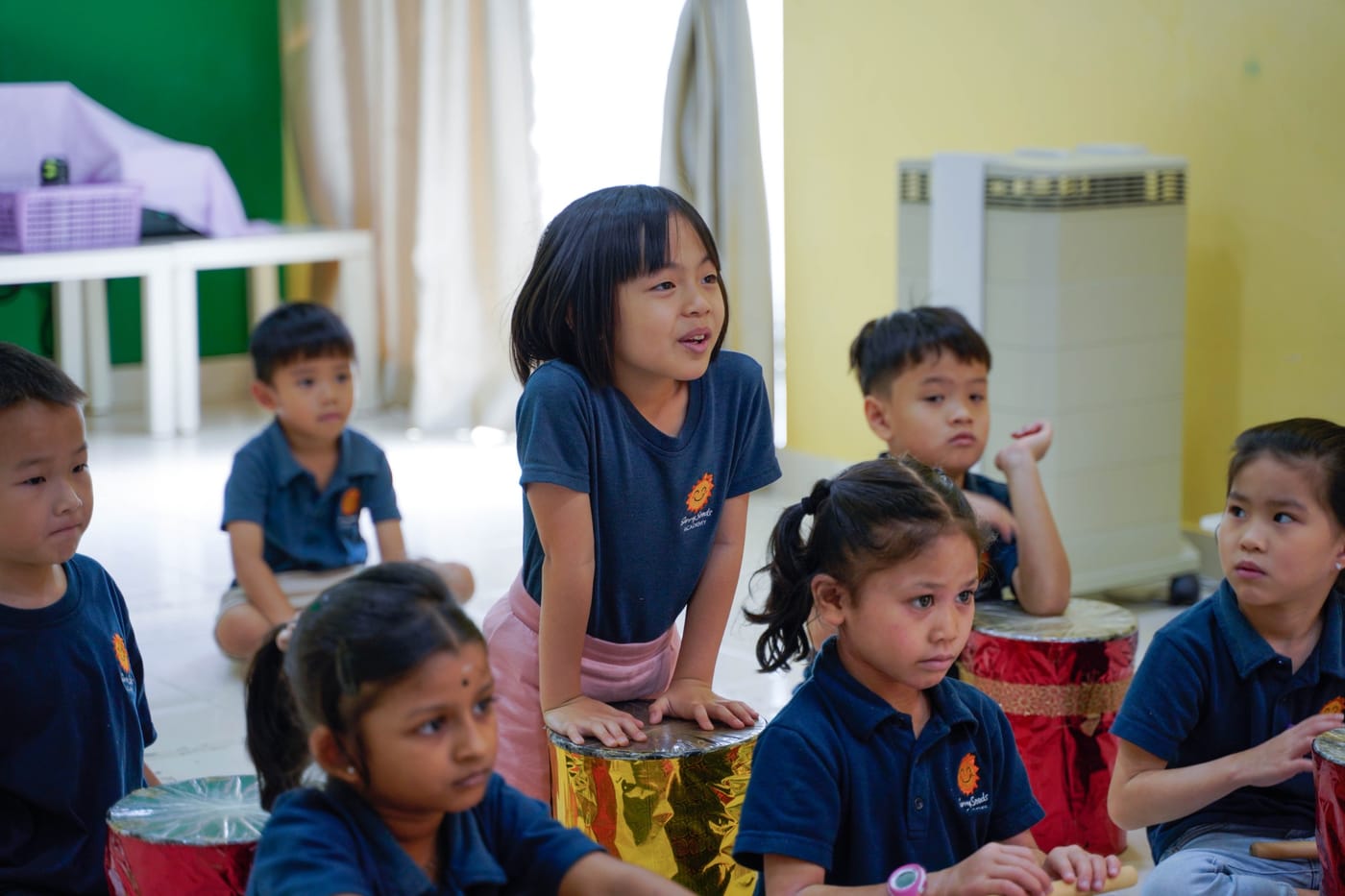
For most children, being ready for Primary 1 is less about reading levels and more about everyday skills: telling an adult what they need, following a routine, managing their own things, getting along in a group, and asking for help when stuck. These grow with practice, and at different speeds. You can notice them at home and talk about them with your child's kindergarten teacher, using the conversation checklist below.
This guide does not cover ages, dates or registration; for those, read Year 1 in 2027: ages, dates and how to plan. It is also not about passing a test. The conversation checklist below is not an admission test. For current Year 1 entry requirements, check with the school you choose and with the Ministry of Education (KPM), your state education department (JPN) or district education office (PPD).
Asking for water, the toilet or help in words a new adult will understand. In a new school that may be in a language that is not your child's strongest, so a few key phrases help.
Arriving, unpacking, lining up, moving between lessons, eating at recess and packing up. A primary school day is usually longer and more structured than a kindergarten morning.
Knowing their own bag, bottle and books, putting things back, and noticing when something is missing.
Using the toilet and washing hands on their own, opening their own food and drink, and managing shoes or buttons.
Taking turns, waiting, joining a game, coping when things do not go their way, and telling an adult when something is wrong.
A child who can say "I don't understand" or "Can you help me?" has a way through most problems in a new classroom. You can practise at home: pause before stepping in when your child is stuck, and ask what they could say to the teacher. Role play with a toy as the teacher works well.
Practise the phrases in the language of the school you are considering. In a national school (SK) the medium is Bahasa Melayu, in an SJKC it is Mandarin, and in an SJKT it is Tamil. Here are three useful phrases in English, Bahasa Melayu and Mandarin:
| English | Bahasa Melayu | Mandarin |
|---|---|---|
| Teacher, may I go to the toilet? | Cikgu, boleh saya pergi ke tandas? | 老师,我可以去厕所吗? |
| Teacher, can you help me? | Cikgu, boleh tolong saya? | 老师,可以帮我吗? |
| I don't understand. | Saya tidak faham. | 我不明白。 |
If your child will attend an SJKT, ask a Tamil speaking relative or the school for the same phrases.
Teachers see your child in a group, which is different from home. Open questions get the most useful answers: How does my child ask for help in class? What do they find easy or hard in the routines? How do they get along with other children? What would you suggest we practise? Take the checklist below to the conversation and write the answers in.
It is not a developmental assessment, a diagnosis or an admission test, and it has no score. A ticked box only means "we have talked about this". Children develop at different paces, and many of these skills keep growing well into Year 1. If you have concerns about your child's development, speech, hearing or health, talk to your doctor.
Our Kindergarten for ages 5 and 6, in K1 and K2, moves from applied learning to independence and leadership readiness for Primary 1. Life skills, Show and Tell and social and emotional learning sit alongside English, Bahasa Melayu and Mandarin. We help children prepare for the move to primary school, but we cannot promise a place at any school or a level of fluency.
Printable
Not a test and not scored. Tick a box when you have talked about it, and write what you notice. There are no right or wrong answers.
SunnySeeds Academy · sunnyseeds.com.my
A conversation guide for families, not an assessment. Written by SunnySeeds Academy, 4 November 2026.
Sources checked 4 November 2026. Official pages can change, so check the source before acting on a date or rule.
FAQ
No. It is an unscored conversation aid for families and teachers, not a school admission test or a developmental assessment. For current Year 1 entry requirements, check the chosen school and the Ministry of Education, state education department (JPN) or district education office (PPD).
The checklist does not diagnose anything; a ticked box only means you have talked about it. Children develop at different paces, and many of these skills keep growing well into Year 1. If you have concerns about your child's development, speech, hearing or health, talk to your doctor.
Come during morning school hours to see what we do, and bring your child along.